Unity AI Gateway and the New Cost-Governance Problem Every CIO Must Now
Databricks didn't ship a smarter model. It shipped a kill switch — and that says more about agentic AI than any benchmark.
In this article
- 1. The AI cost problem has changed
- 2. From experimentation to an AI estate
- 3. Why traditional governance falls short
- 4. What Unity AI Gateway changes
- 5. From visibility to governance
- 6. The kill-switch problem
- 7. Governance moves into the runtime
- 8. The multi-provider problem
- 9. A gateway is not the strategy
- 10. The new governance architecture
- 11. The CIO checklist
- 12. Cost governance is architecture
On June 16, Databricks stood on stage at Data + AI Summit and shipped something that had nothing to do with a smarter model or a faster query. It shipped a kill switch.
Unity AI Gateway's headline capability is a hard spend cap — an agent gets automatically stopped the instant it crosses a budget line, before a human has to notice, escalate, or approve anything. Databricks went further than most vendors would and published their own internal numbers on how they use it to govern their own coding agents' spend.
That's the detail worth sitting with — not the feature itself, but the fact that a platform vendor felt the need to build a stop button into agentic AI at all, less than two years into the agent era.
1The AI cost problem has changed
An AI agent doesn't just consume resources when someone asks it to. It can initiate multiple model calls, retry a failed step in a loop, invoke tools, and spawn sub-agents — all without a person in the decision loop. Traditional cost governance was built for predictable, human-triggered consumption. Agentic AI breaks that assumption structurally, not occasionally.
2From AI experimentation to an AI estate
Most enterprises stopped thinking in single AI applications a while ago, whether they've admitted it or not. What actually exists today is an estate:
- AI agents and sub-agents
- Multiple LLMs and model providers
- APIs, MCP servers, and tools
- Internal and fine-tuned models
- Third-party SaaS AI features
- The data sources feeding all of it
- The automated workflows connecting it
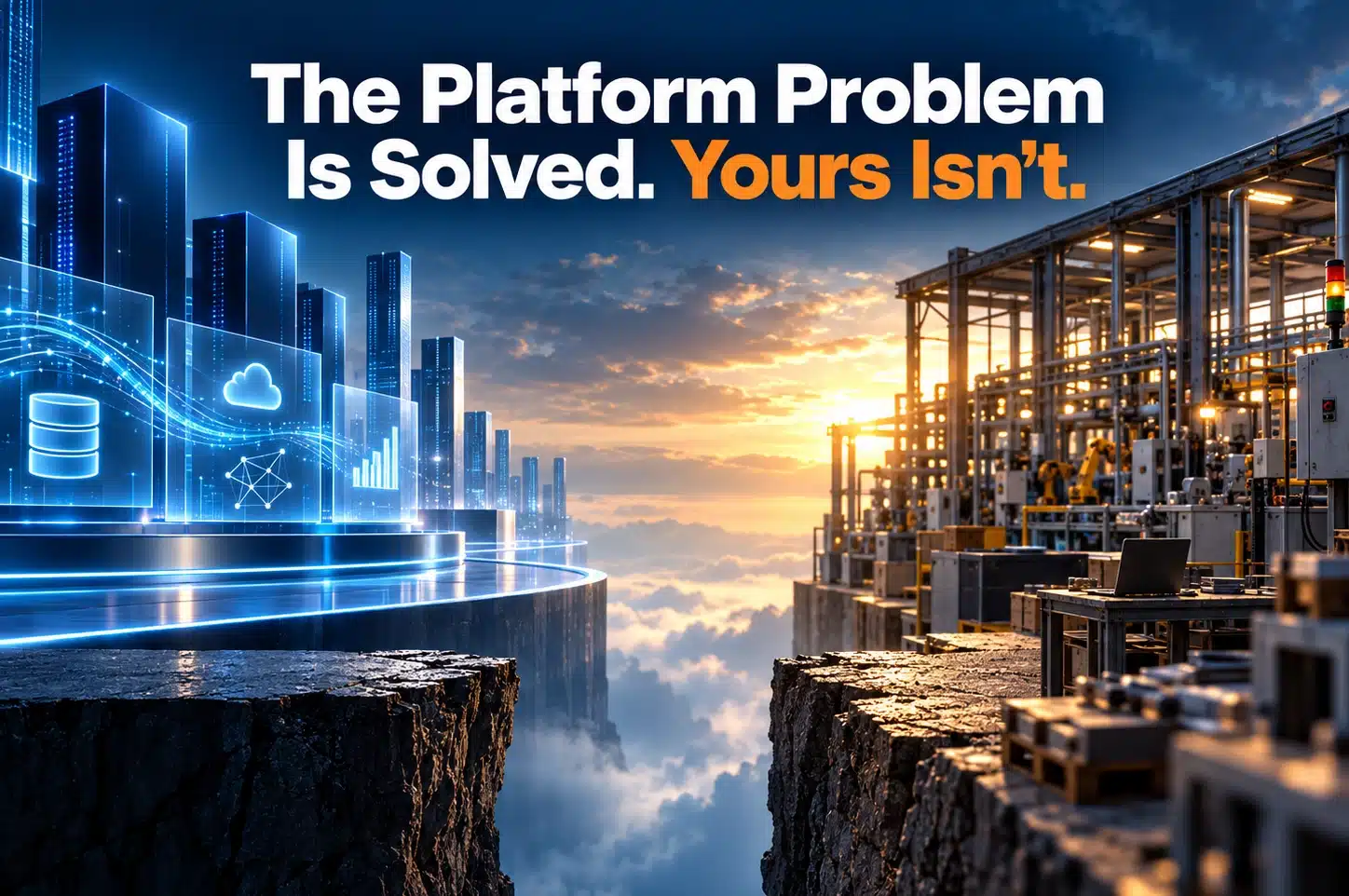
The question that matters: can your organization actually see and govern this entire estate — or only the piece that happens to sit on one platform?
3Why traditional cost governance falls short
| Traditional cloud governance | Agentic AI |
|---|---|
| Predictable, provisioned infrastructure | Dynamic, consumption-driven by autonomous decisions |
| Human-triggered spend | Agent-triggered spend — retries, sub-agents, tool calls |
| Cost reporting, after the fact | Rapid, cross-provider escalation before anyone reviews it |
This gap is exactly why a new governance layer became necessary — not a nicer dashboard, a different layer entirely.
4What Unity AI Gateway changes
| Capability | Status | What it does |
|---|---|---|
| Hard spend caps | GA · Aug 4, 2026 | Auto-blocks requests at a budget threshold — user, workspace, use case, or org |
| Cost attribution | GA | Traces spend to a specific model, provider, and requester |
| Unified observability | GA | One view across Databricks-hosted and external models (OpenAI, Anthropic, Gemini, others) |
| Smart Routing | Beta | Routes a request to the most cost-appropriate model |
| Runtime guardrails | GA | PII and prompt-injection protection at execution time |
Sources: Databricks — AI governance at Data + AI Summit 2026; Databricks — Introducing AI spend controls with Unity Gateway
This is the main point: it's a control-plane layer, positioned to govern what an agent is allowed to do and spend while running — not a monitoring feature added after the fact. Databricks' own published figure — over a quadrillion tokens have already moved through the Gateway — says the exposure this closes is already at scale, not theoretical.
5From visibility to governance
There's a progression most enterprises stall halfway through:
- VisibilityWhat was spent
- AttributionWho spent it
- ControlWhat's allowed
- OptimisationWhat it should cost
Where most enterprises stall
Knowing what an agent spent is not the same as being able to control what it's allowed to spend. A dashboard gives visibility. A policy engine gives control. Most organizations today have built the first and assumed it covers the second — it doesn't.
6The kill-switch problem
"Who owns the kill-switch" sounds like one question. It's actually six, and a CIO needs a named answer to every one:
- Who sets the spending policy?
- Who owns the agent in production?
- Who receives the alert when a cap is hit?
- Who can actually stop execution — and how fast?
- What happens to a workflow that's mid-task when the limit fires?
- What happens to spend that occurs outside the governed platform entirely?
If any of those has no name attached, that's not a technology gap. It's an ownership gap.
7Governance must move into the runtime
The old model — governance after the money is spent
- Usage
- Consumption
- Invoice
- Investigation
The model this forces — enforced while the AI is running
- Request
- Identity
- Policy
- Model
- Usage
- Cost control
Governance that only happens after consumption isn't governance. It's an audit.
8The multi-provider governance problem
A realistic enterprise AI estate today looks like Databricks and OpenAI and Anthropic and Gemini, spread across Azure, AWS, internal models, and a handful of SaaS AI features nobody centrally approved.
Unity AI Gateway can govern traffic that passes through it — but ask the question a board would ask:
If you use five providers, where does the single source of truth for AI governance actually live?
9A gateway is not the entire governance strategy
Worth saying plainly, because a vendor announcement rarely will: a gateway is a critical control point, not a complete governance strategy. Before treating it as one, an enterprise still needs answers to:
- What traffic actually passes through the gateway — and what doesn't?
- Which providers and models are covered, and which are shadow usage?
- Are all costs captured consistently, or are some estimated?
- How are exceptions and overrides handled, and who approves them?
A gateway becomes the backbone of governance. It doesn't replace the need for an organization-wide model around it.
10The new AI governance architecture
- Users, applications and agentsOwner usually named
- Identity and accessOwner?
- AI gateway / control planeOwner?
- Policy, cost, security and guardrailsOwner?
- Models, providers, tools and MCPOwner?
- Usage and attributionOwner?
- Enterprise governanceOwner usually named
Every layer in that chain needs an owner. Most enterprises can name an owner for the first and last link. Almost none can name one for every link in between.
11What CIOs should ask before the next agent deployment
| Category | The question |
|---|---|
| Visibility | Can we see AI consumption across every provider, today — not at month-end? |
| Attribution | Can we identify the team, application, agent, and use case behind any given spend? |
| Control | Can we stop or limit an agent before spend escalates, not just after? |
| Runtime governance | Are policies enforced during execution, or only reviewed later? |
| Ownership | Is there a named owner for every production agent? |
| Coverage | Does governance span the whole AI estate, or only one platform? |
12AI cost governance is becoming architecture
AI cost governance stopped being a Finance or FinOps line item the moment agents started making decisions and initiating work without waiting for approval. Once that's true, the economics of AI aren't a budget question anymore — they're an architecture question.
The question for a CIO is no longer "how much did our AI cost?" It's:
Who controls what our AI is allowed to consume, and where is that control actually enforced?
That's the same question Logesys works through with data and platform teams — including Databricks environments — building the data engineering foundation that makes real attribution possible, and applying the same governed-by-design thinking behind our own Apps IQ work. If your architecture can't yet answer that question with a name attached, that's worth a conversation before the next agent goes into production.
Can you name the owner of every link?
Talk to Logesys before your next agent goes into production.